




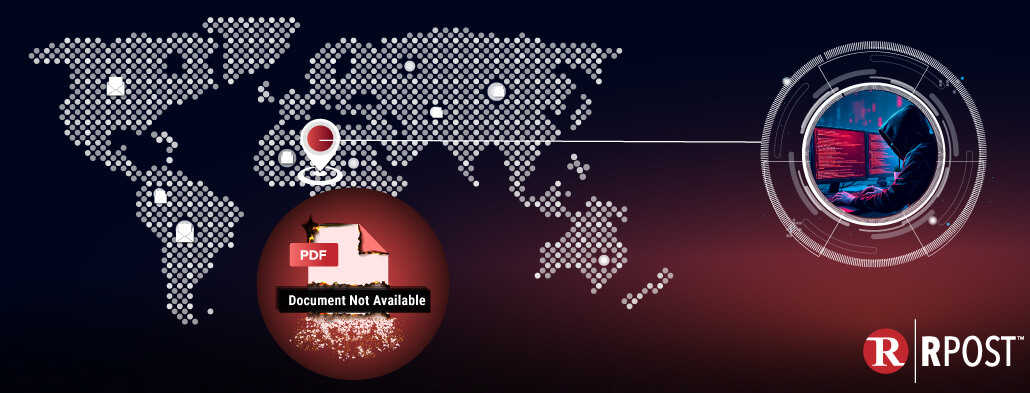
We all rely on third-party systems, such as cloud drives, partner portals, vendor mailboxes, and more. But here’s the problem with traditional defenses. They can only guard what’s inside your walls.
Once your sensitive documents land in a partner’s mailbox or a third-party system, you don’t have any control, and are often blind to what happens next.
The reality is:
A smarter approach is having the right tools like RPost’s RAPTOR™ AI that can:
Now, you might think that having warnings is good, but what you really want is action. That’s where RDocs™ steps in by:
And what happens if you have a combo of RAPTOR and RDocs? You get Threat Radar and Terminator rolled into one neat package.
You’re not just watching your perimeter. You’ve got a live radar of risks outside your network and the ability to terminate them before they cause harm.
Contact RPost, if you'd like a walkthrough on how these technologies work.
October 09, 2026

October 06, 2026

September 09, 2026

September 01, 2026
August 26, 2026



 Industry Insights