


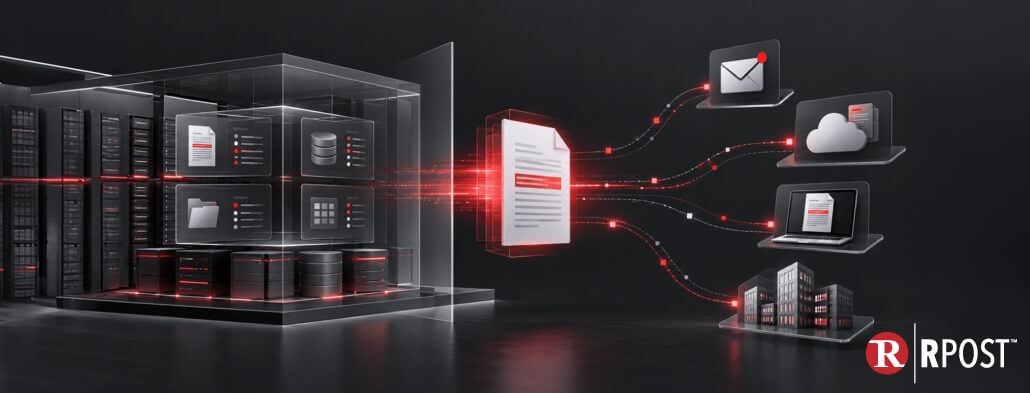
For organizations with robust security, having DSPM as a strategy gives security teams visibility into where sensitive data sits, who can access it, and where it may be overexposed. The challenge comes when that data leaves the systems DSPM is watching.
That happens constantly in routine business operations. For instance, a claims file gets emailed to outside counsel, financial records are shared with an auditor, customer information moves to a partner, or a confidential document is downloaded and sent outside the organization.
Each of those actions changes the security context around the data. And this is not limited to the first recipient. That document may be forwarded again, opened from a different network, shared with another person, or accessed weeks later when the original business need has changed.
As the document moves across inboxes, devices, cloud folders, and third-party environments, visibility can become fragmented, and the controls applied in the original system may no longer travel with it.
That is the gap RDocs® is designed to address. It converts documents into RPD™ Rights Protected Documents that carry access controls with them after distribution. Organizations can restrict who can read a document, limit when or where it can be accessed, monitor activity, and change supported access settings or revoke future viewing after it has been sent.
RAPTOR™ AI adds another layer by identifying suspicious access to RPost-protected content, while AI Auto-Lock™ restricts further access, notifies the document owner, and lets the owner decide how to proceed.
DSPM can help you find and classify sensitive data. The next question is what control remains once that data starts moving outside the systems where it was discovered. If that gap is part of your DSPM strategy, let’s talk!
November 03, 2026
October 15, 2026
October 09, 2026
October 06, 2026

September 09, 2026


 Industry Insights
