




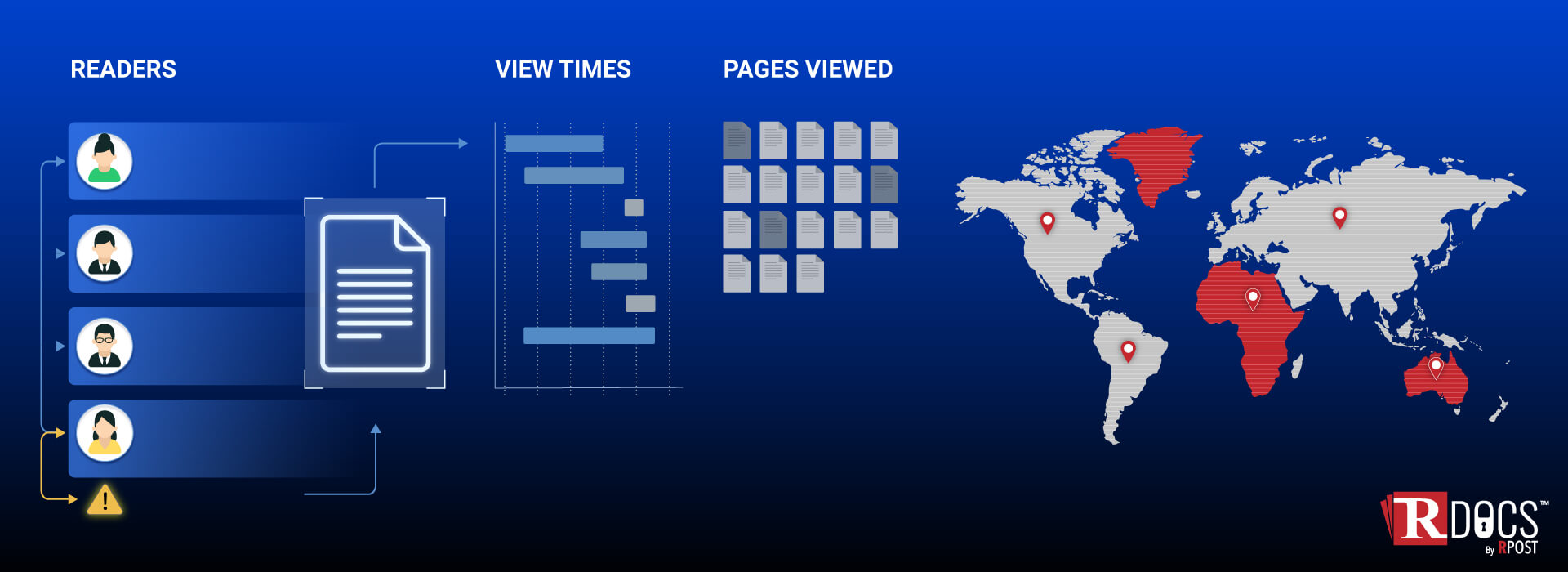
Document Readers Tracking and Viewing Activity is useful only when it helps a team make better access decisions. Knowing that a file was opened is a weak signal on its own. Sensitive document workflows need more context: who viewed the file, whether that person was expected, how the review unfolded, and whether access should remain active.
This matters most when documents carry business value beyond their format. A merger deck, legal strategy memo, patent disclosure, board report, investor update, pricing model, or licensing agreement may look like a normal file, but the information inside can influence negotiations, legal exposure, competitive position, or deal timing.
For CISOs, Chief Legal Officers, and Operations Directors, document tracking should not be treated as a dashboard feature. It should be part of a practical accountability model for shared information.
The first step is to define why the document is being shared. Different workflows require different levels of visibility.
A due diligence folder shared with a buyer’s legal team has a defined purpose, a defined review group, and a limited review window. A patent draft shared with outside technical counsel has a different risk profile. A litigation document shared with experts may require a record of who accessed it, when they accessed it, and whether access continued after the matter moved forward.
Without that context, viewing activity becomes noise. A file opened five times may be normal during negotiation. The same pattern may be unusual after the review period closes. A document accessed from a new location may be expected for a traveling executive. It may also indicate that the file reached someone outside the approved review path.
Document readers tracking becomes valuable when it is tied to business rules before the file is sent.
Reader accountability means the document owner can connect access activity to an expected reader, role, or review purpose. It is not only about surveillance. It is about reducing ambiguity after a sensitive file leaves the sender’s direct environment.
Before sharing, teams should define four things.
First, who is allowed to read the document. This may be a named individual, a defined external team, a legal advisor, a buyer group, or an internal approval chain.
Second, what level of access is appropriate. Some readers may only need view access. Others may need to comment, download, print, or route the document forward. These rights should match the business need.
Third, how long access should remain open. Many sensitive documents are useful only during a review window. If the project, case, or deal phase ends, access should not stay open by default.
Fourth, what activity should trigger a review. Repeat access, unusual timing, access from unexpected locations, attempted forwarding, or activity outside the approved review group may not prove misuse, but each may justify a closer look.
This turns document access control into a planned workflow rather than a reaction after something feels wrong.
Viewing activity is the behavior record around a document. It may include open events, view count, reader identity, reading duration, page-level activity, access time, and location context where available.
These signals are most useful when grouped into practical questions.
Identity signals help answer whether the right person accessed the document. Engagement signals help show whether the reader meaningfully reviewed the content or only opened it briefly. Timing signals help show whether access happened during the expected review window. Distribution signals help indicate whether the file may have moved beyond the original recipient.
For example, an M&A team sends a financial model to an approved advisor. A basic open receipt may show that the file was opened. Secure document analytics can provide a fuller record: whether the same reader returned several times, whether access occurred after the review period, and whether the activity pattern matches the expected workflow.
The goal is not to overread every action. The goal is to give the document owner enough context to decide whether access should continue, narrow, pause, or end.
A common weakness in document tracking programs is that teams collect activity data without defining what to do with it. The result is a log that only becomes useful during a dispute, audit, or incident review.
A better approach is to map reader activity to action rules.
If a document is accessed by an approved reader during the review window, access can remain unchanged. If the same document is accessed after the review window closes, the owner may revoke access or shorten the expiry period. If a document appears to move outside the intended audience, the owner may restrict access to named readers. If a high-risk document shows unusual activity, the owner may pause access while the team reviews the situation.
This is where document tracking becomes operational. The security team sees the access context. The legal team gets a clearer record of document handling. Operations get a process that can be applied consistently across high-value workflows.
Standard file sharing often separates delivery from control. Once a PDF, spreadsheet, or presentation is downloaded, the sender may no longer know who has it, where it is stored, or whether it was forwarded. Email open tracking may show engagement with the message, but it usually cannot govern what happens to the attachment after delivery.
Portals and data rooms can help in structured projects, but they may create friction for fast-moving external review. External readers may resist new logins, new systems, or software downloads, especially when they only need to review a single document.
This creates a practical challenge. Teams need accountability, but the workflow still has to work for outside counsel, buyers, partners, board members, advisors, and executives.
Enterprise digital rights management is most useful when it reduces this tradeoff. The document should remain controlled without making approved readers struggle to access it.
RDocs can fit into this workflow by pairing broad document access with sender-side control. Its Rights Protected Document, or RPD, approach is designed to let approved readers access protected documents through a browser-based experience while the sender retains visibility and control over the document after sharing.
In an accountability workflow, RDocs can support three practical needs.
The first is reader visibility. Teams can track views and reader activity so the document owner has a clearer record of who accessed the file and when.
The second is controlled access. Depending on the document’s sensitivity, the sender can apply reader-level controls, limit who can access the content, and use permissions that match the review scenario. This helps reduce uncontrolled access and can help prevent document forwarding from expanding the audience beyond the intended group.
The third is post-sharing action. If access should no longer continue, the sender can restrict, revoke, pause, or kill document access after delivery where the selected RDocs control level supports it. This is especially useful for legal reviews, M&A diligence, intellectual property disclosures, pricing files, and other documents that should not remain open indefinitely.
RDocs supports this type of workflow by combining reader tracking with document access control and post-delivery document revocation options. For organizations that share sensitive files with outside parties, the value is not only knowing that a document was opened. The value is knowing when access should continue, when it should narrow, and when it should end.
October 13, 2026

September 01, 2026

August 13, 2026
July 10, 2026
July 03, 2026



 Blog
Blog