





One of the most underappreciated ways customer data slips out of an organization has nothing to do with sophisticated cyberattacks or dramatic breach headlines. It happens through ordinary business documents — contracts, compliance files, proposals, board decks, customer forms — files that move through normal workflows all day long.
These documents get shared, downloaded, forwarded, stored, reopened, and passed along again. And somewhere in that journey, sensitive customer data travels with them.
Most organizations invest seriously in securing their systems, email environments, and cloud platforms. But customer data does not stay neatly inside those systems. It spreads into documents, and documents leave controlled environments constantly. Once that happens, teams lose visibility, lose control, and start relying on trust where policy should be doing the work.
That is where document security tends to break down — not at the point of sending, but at everything that comes after.
The act of sharing a sensitive file is only the beginning. What matters is what happens next. Who opened it? Who downloaded it? Who forwarded it along? Does access still exist long after it should have been closed? Can the sender revoke access if a document reaches the wrong hands? Can the organization prove who viewed a document and when?
For many businesses, the honest answer falls somewhere between “not really” and “we would rather not answer that during an audit.” That gap is exactly why document security needs to follow the document itself — not just the system that first sent it. If sensitive customer data lives inside a file, then protection has to stay attached to that file across its entire lifecycle.
The exposure that organizations face is rarely dramatic. It shows up in ordinary moments: a file gets shared with more people than intended, a document remains accessible well past its intended window, a recipient downloads and redistributes a sensitive file without anyone knowing, or a dispute arises and no one can produce a clear activity trail.
This is not edge-case risk. This is routine business exposure.
What organizations actually need is not just the ability to send documents — it is the ability to maintain control over them even long after they leave. That means knowing who has access, being able to see how a document is being used, and having the ability to act when something does not look right.
Documents are among the most common vehicles for regulated and sensitive information. Contracts carry names, financial details, and account information. Reports contain business data subject to regulatory oversight. HR and onboarding files hold identity records. Compliance documents often include exactly the kind of information regulators scrutinize most closely.
Yet many of these files are still managed through loose, convenience-first workflows that were never designed with control in mind. The document gets created, gets sent, and then essentially disappears into the wild.
That is the gap that structured document security is meant to close — giving organizations a way to protect sensitive files not just when they are created, but across the full arc of how they are handled.
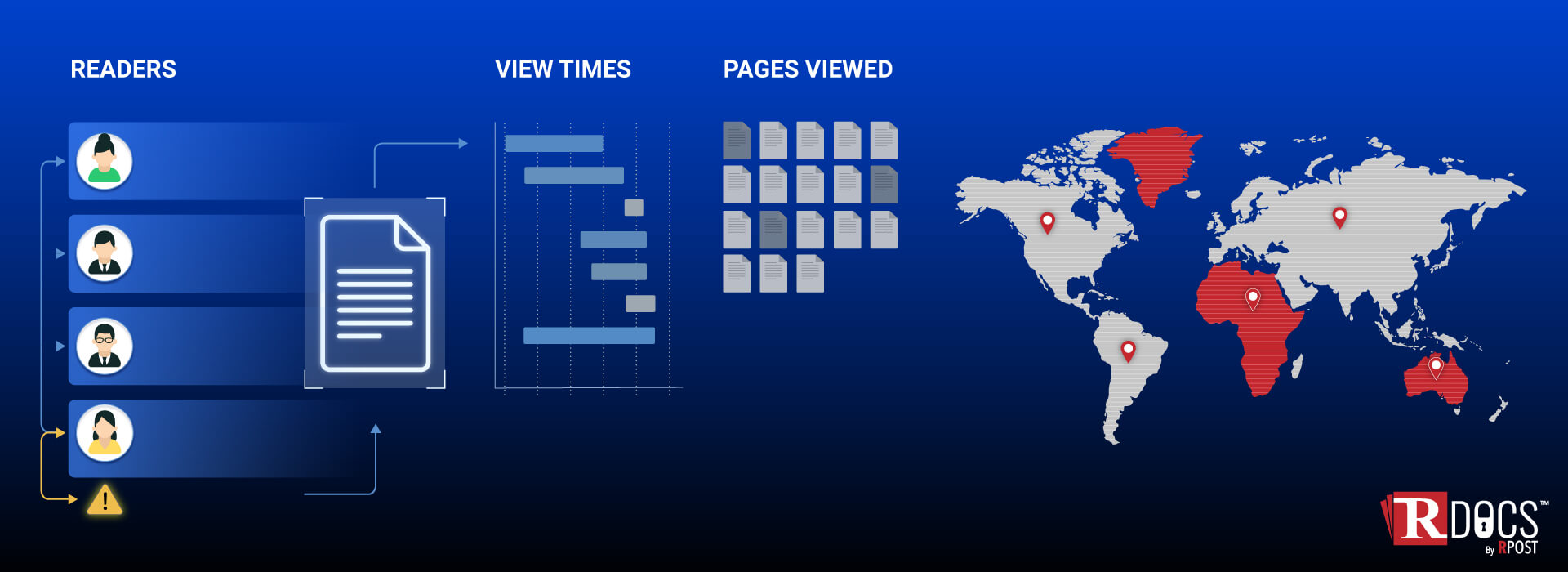
RDocs® gives organizations a practical way to secure sensitive documents after they leave controlled systems. It transforms files into Rights Protected Document™ (RPD™) files so senders can control document access, manage content sharing, restrict views by location, control or kill content after sending, and enable secure in-document interaction. Readers can access files easily in their browser, without special software or logins, while the sender keeps control over who views what, when, where, and for how long.
October 13, 2026

September 01, 2026

August 13, 2026
July 10, 2026
July 03, 2026



 Blog
Blog