




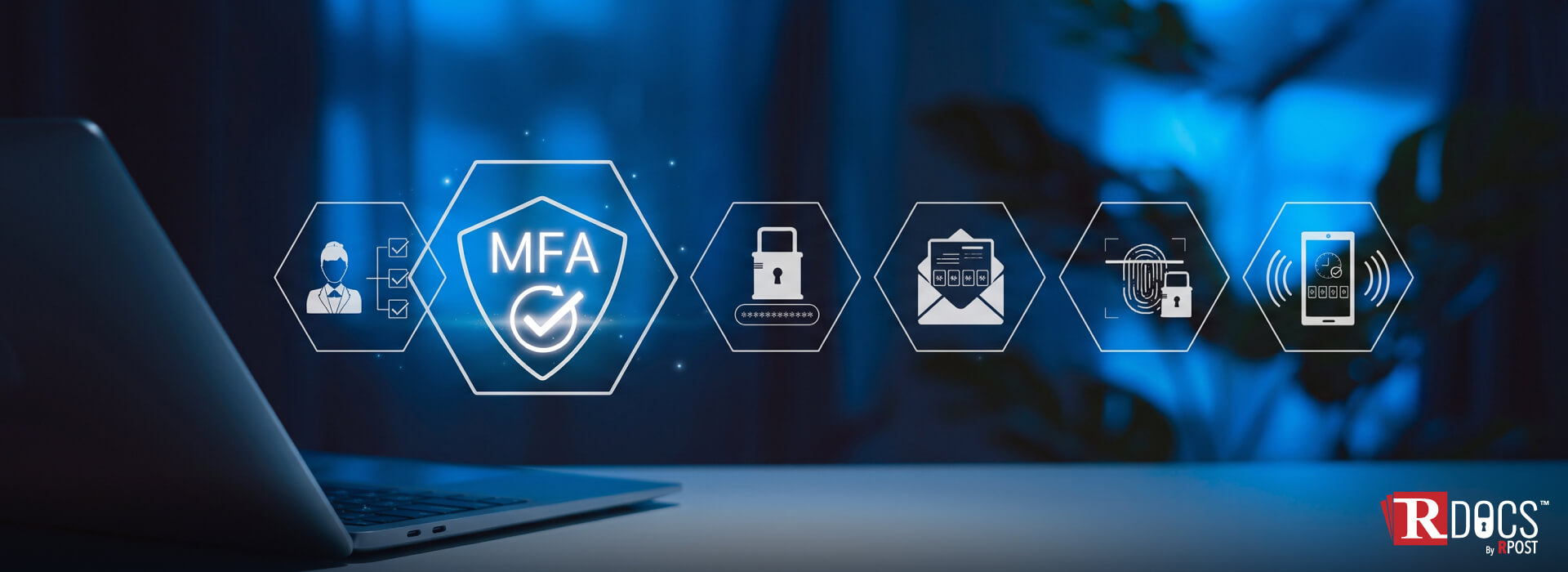
A password-protected file can still be exposed by a compromised password, a forwarded link, or an account that remains active after a business relationship changes. That is why Multi-Factor Authentication matters for sensitive documents. It adds a second proof of identity before a recipient gains access to high-value information—but it should be only the beginning of a document-security strategy.
For CISOs, compliance officers, and legal operations leaders, the challenge is especially acute when sharing intellectual property, regulated information, investigation materials, transaction documents, or privileged content with people outside the business. The organization must verify the recipient without turning every exchange into a support request.
Multi-Factor Authentication, or MFA, requires more than one type of evidence to confirm identity. These factors generally fall into three categories: something a person knows, such as a password or PIN; something they have, such as a security key or approved device; and something they are, such as a biometric.
The security value is straightforward. If an attacker obtains a password, the password alone should not be enough to open the protected resource. MFA creates another decision point: can the person requesting access also prove possession of the approved factor?
That makes MFA an essential gateway for sensitive document access. It reduces reliance on credentials that can be guessed, reused, stolen, or entered into a phishing site.
MFA is not a single control with a uniform level of assurance. A one-time passcode can provide a meaningful additional barrier, but it is not necessarily resistant to phishing or real-time relay attacks. For highly sensitive material, security teams should assess the authentication method alongside the risk of the document, the recipient’s role, and the consequence of unauthorized access.
This is particularly important where a document may reveal patent strategy, merger terms, protected health information, legal advice, source code, or confidential financial information. The question is not simply whether MFA is enabled. It is whether the authentication experience is appropriate for the sensitivity of the information and the way it will be shared.
MFA answers an important question at the moment of entry: “Is this the intended person?” It does not, by itself, answer what happens after access is granted.
Consider a legal team that shares a sensitive diligence file with outside counsel. The recipient may authenticate successfully, download the file, and later forward it to an unauthorized person. Or a supplier may retain a product-design document after the relationship ends. In both cases, the initial authentication may have worked as designed, yet the organization has lost practical control over the document.
This is the distinction between access control and persistent document security. Access control governs the front door. Persistent security keeps the document subject to policy after it reaches the recipient.
Security controls fail in practice when they make legitimate work needlessly difficult. External recipients may be customers, regulators, outside counsel, advisers, partners, or prospective investors. Requiring each person to install software, create a new account, or navigate an unfamiliar portal can slow important work and create avoidable support burden.
Frictionless Multi-Factor Authentication should preserve the assurance of identity verification while respecting the recipient’s time. The design goal is simple: present a clear authentication step, minimize avoidable enrollment, and align the process to the sensitivity of the document.
A good experience does not mean removing verification. It means placing security where it protects the interaction without making routine collaboration impractical.
Enterprise Digital Rights Management adds the controls that MFA alone cannot provide. It can connect access decisions to the document itself, helping senders manage what happens after a recipient has been authenticated.
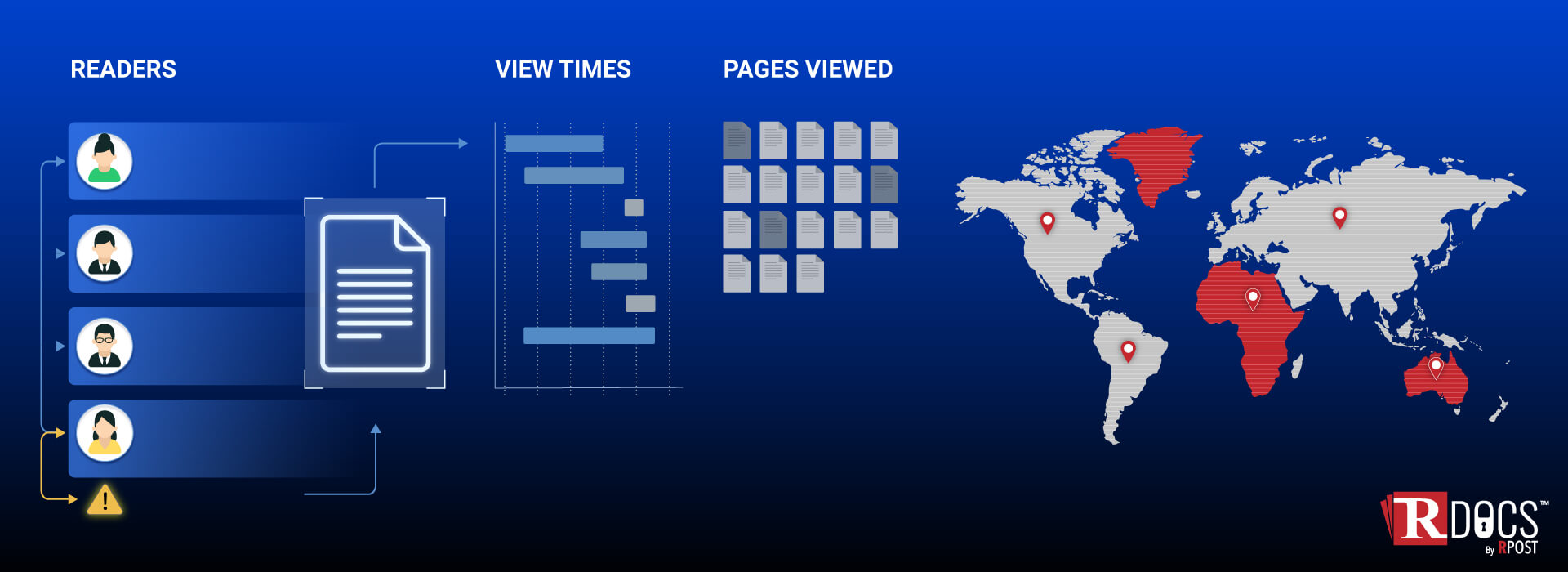
For example, document-level controls may allow a sender to restrict access to named recipients, monitor document activity, limit access under defined conditions, or revoke access when circumstances change. These controls matter when a file can outlive the email, link, or project that originally delivered it.
The combined model is stronger: MFA verifies the recipient at the point of access, while Document Access Control and Persistent Document Security govern the document throughout its life.
RDocs applies this model through Rights Protected Documents (RPDs). Instead of relying only on a shared location or password-protected attachment, the document carries persistent protection intended to remain relevant after delivery.
For teams sharing sensitive materials externally, RDocs is positioned as a way to authenticate access and then retain document-level control. Senders can track activity, restrict access, or end access when needed, while recipients can access the document without installing software or creating an account.
This approach is useful when the organization needs security that travels with the file, not just security around the system that first delivered it.
October 13, 2026

September 01, 2026
August 13, 2026
July 10, 2026
July 03, 2026



 Blog
Blog